
Marie left her boyfriend Meursault, after he was detained, imprisoned and waiting trial for murder charges. At first, Marie was hopeful that her boyfriend would be released and his charges dropped. As time dragged on, it became clear that Meursault would not be freed nor acquitted after his trial. Marie lost hope and broke away from her relationship.
We’ll discuss the important messages in The Outsider, after this summary.
Monsieur Meursault, the narrator, was in the prime of his life, when he received news that his mother has died in a nursing home. He tried to be brave and not show a breakdown at the funeral. Later, this episode was held against him, as being unfeeling.
Meursault, his girlfriend Marie, and his friend Raymond, went to the Algiers beach, to spend time with Masson and his wife. This was their lunch. (Camus, P. 47)



The group met Raymond’s enemy, an Arab man. Raymond was mistaken that their old quarrel was forgotten, like water under the bridge. The Arab still held resentment against Raymond. He took out a knife and slashed Raymond on his arm and mouth. The fight was dispersed.
Later, Meursault went for a walk and met the Arab on the beach. The Arab took out his knife and Meursault thought he had to defend himself. He had Raymond’s gun in his pocket and in a moment of anxiety and fear, he took out the gun to shoot at the Arab.
Meursault’s fate was sealed.
Idiosyncrasies of Meursault
Monsieur Meursault is rather affected by strong sunlight and heat. He explains this effect logically, but I have some suspicion that he may have seen exaggerated illusions in hallucinations.
He shot at the Arab, to fight him, in response to perceived threat. Every human is programmed psychologically to respond to fight a threat or run away from it. Meursault had no time to think about the consequences of firing a firearm, or killing a man.
After his appeal fails, Meursault gives up hope, prepares for death and even visualizes the event into his bow out from the world stage, as he hopes for a big turn out at his execution.
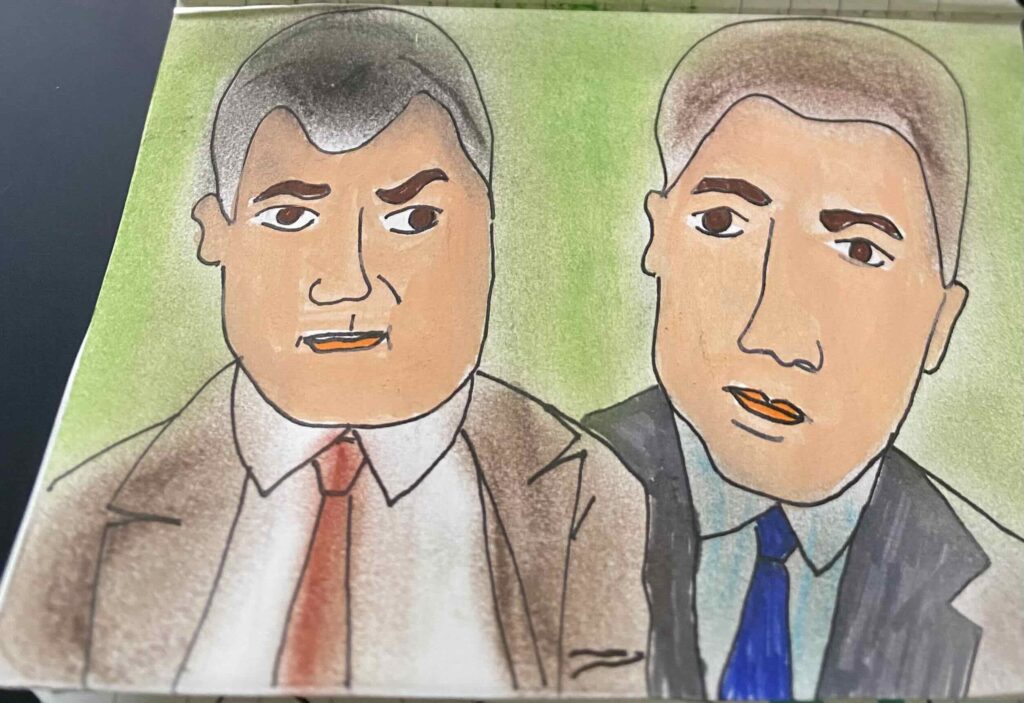
Albert Camus’ important message in The Outsider
We learn from shared experiences and writings. My impression of Camus’ message is that he desired to show us the contrast of life as a free individual, as opposed to that as an incarcerated one. Self-protectionism, self-initiation, anxiety and fear wasted away freedom.
Meursault protected Raymond by taking away his gun. But he fell victim to his own weaknesses.
What can we learn from exposure to heat?
I think Meursault was affected by strong sunlight at the beach. He was irritated by the sun. He couldn’t think logically. He didn’t think of running away from the Arab man, even as he saw him flashing a knife. Meursault was over stimulated by the sight of the knife. He did not think nof the consequences of firing a gun. His capacity to make a logical decision was largely impaired – how could he not be aware that the offense of shooting a man was greater than the threat of seeing a knife?
Mersault had suffered a headache, and other symptoms of heat, like sight illusions of the sun.
Mersault was vulnerable to the sun’s heat. He was not wearing protective headgear like a hat, or dark sunglasses. He was not using an umbrella. He was not carrying a bottle of water to drink to lower his internal body temperature.
Themes in The Outsider
(1) Friendship
(2) Love
(3) Justice
(4) Acceptance
(5) Closure
These themes are classic ones and still relevant in today’s world.
This book reminds me of real people I met. I once considered them friends, but they failed to reach out when I was drowning in problems. They were more concerned for their welfare. They would not even speak to give counsel.
Look what happened when Meursault helped Raymond. It became fatal for him.
Good points and bad points in The Outsider
There are lessons to remember in this story.
The good and bad points come together. Although the bad point showed there was no redemption for Meursault, its dominant good point is to teach readers the lesson of refraining to interfere or help in another person’s personal affairs.
Rating for The Outsider:
There are 5 categories of ratings: Good, Bad, Recommend, Miss It, Ignore This Book. I choose Recommend.
My favorites quotes in the book:
I was overwhelmed by memories of a life that I could no longer claim as mine, a life which had offered me the most subtle but most persistent of joys: the scent of summer, the neighborhood that I loved, a certain type of sky at night, Marie’s laughter and her dresses. (Camus, p. 95)
I opened myself for the first time to the tender indifference of the world. To feel it so like me, so like a brother, in fact, I understood that I had been happy, and I was still happy. (Camus, p. 111)
Other media with similar stories
I can’t remember similar stories from long ago. I can recall memories which are recent.
Franz Kafka’s The Trial is a little similar in the same vein, being a story about a man who was arrested for a mysterious reason which he could not understand. The Trial is a story written in absurd comedy. Which The Outsider is not.
Describe The Outsider using an emoji:
🙁
One word book review of The Outsider:
Justice.
One sentence review of this book The Outsider:
Is Justice served when one life is taken as retribution for another life?
What if a good life is taken to compensate the loss of a lowly life?
Reaction to this book
Good or not?

If you’re looking to buy The Outsider, click below:
Blogging Tips
I’m co-hosting a bloghop with many others. You can see samples at https://artmater.com/?s=ttot
If you’re excited to become a co-host, please leave a comment here and I’ll connect you to the host, Clark. He’ll send you the Linky codes to use in your blog.
*
I’m open to collaborations like bloghop, prompt writing bloghop, blog challenge bloghop, book review bloghop, art prompt bloghop. If you’re looking for participants for any of these, please leave your link in a comment.
Leave a Reply